What a nice day I'm having. Getting on with my job, doing my thing, and then bam! The technology gremlins decide to ruin my day. The thing that has worked day in and day out for years is suddenly not working. Time for the dreaded support call.
I wonder to myself, am I perhaps mistaken? Maybe I should check again. It could just be something I did. That is support's job though, to help, check and get to the answer. OK, it's time to make the call.
The process now begins of explaining everything to a person on the other end, giving the whole story from top to bottom, uncertain if I've given too much detail or too little. The support tech begins extracting more information, and slowly my patience gets tested. I'm frustrated and just need a quick fix so I can get back to what I was doing.
"Did you try restarting it?" asks the support tech.
Of course I have!! Well, actually, now that I think about it, I didn't really. OK, let me try that quickly.
I hang my head in shame as the thing that was broken is now magically working again.
The support tech thinks to themselves, how many times can I keep answering the same question? There is probably a limit, and it's different for everyone.
Has the human run its course in tech support? I would think that very shortly the answer might just be a solid yes.
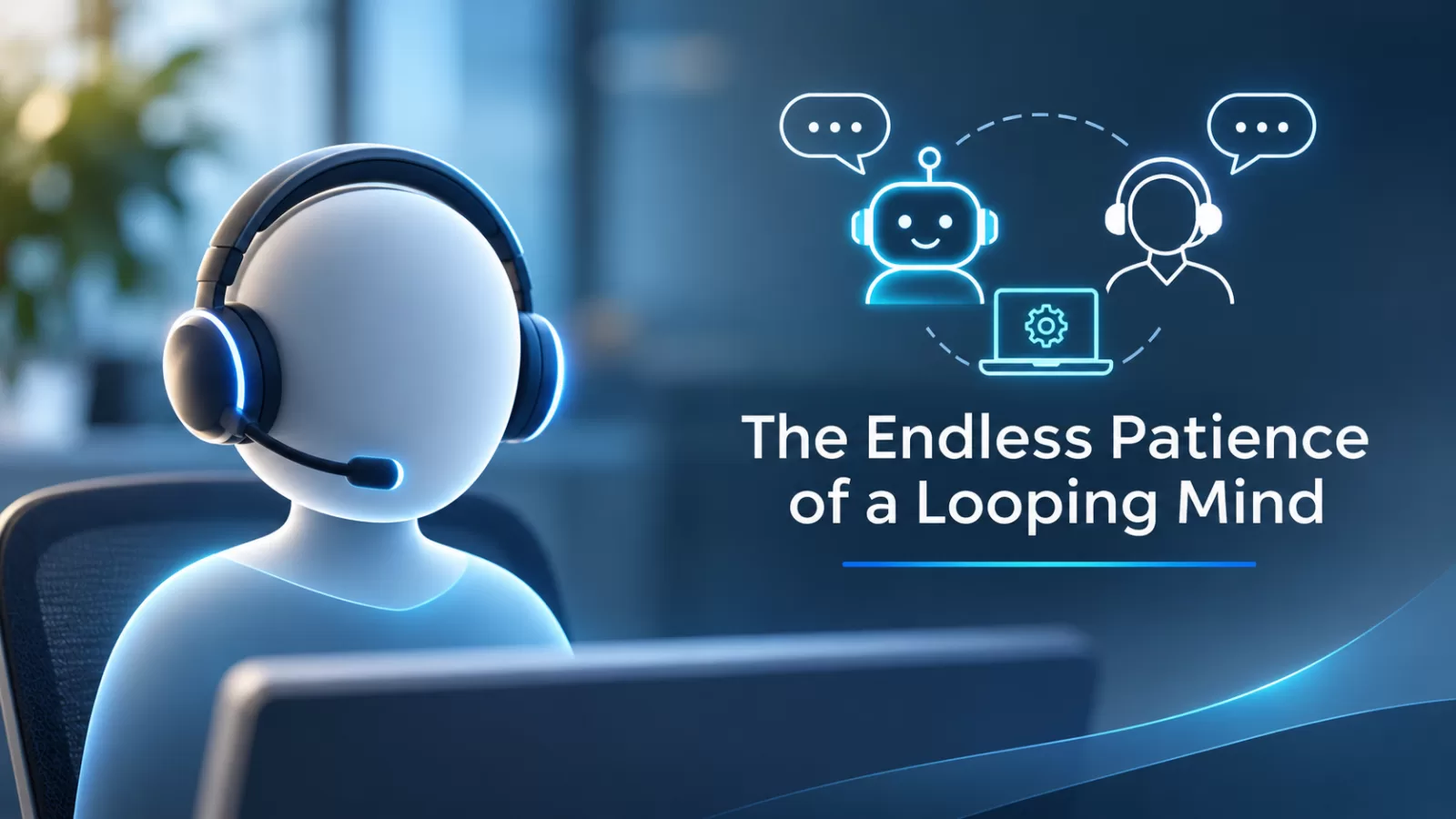
What if there was a support tech that could answer your questions all day long without getting tired or frustrated? Someone who doesn't care how many times you ask the same question in different ways? That time is fast approaching.
What does an AI support tech need that a human possesses? Eyes, ears, a brain and a mouth.
The eyes are simply to see what you see, through pictures, screenshots and videos. The ears listen to what you say, typed or through voice. The real magic, though, needs to be the brain.
What does a human tech possess? An understanding of the problem, tools to investigate it, and the ability to come to a reasonable conclusion. This has been the part that needed the most work.
In order for AI to do a human tech support job, it needs the same tools as the human. When we provide support, we have experience, access to code and access to the database. With this toolbelt, surely AI could perform the same functions?
Finally, the mouth is the feedback you need to receive for the whole process to conclude.
"You are correct, Mr Smith. There was a problem, and it has now been resolved."
There is a flip side. AI is a bit loopy.
What if you genuinely did try everything, only to be told to try it again? There is only so much bad tech advice you can take before you also run out of patience.
Endless patience is one thing. Good judgement is another. An AI might happily walk you through the same solution twenty times without losing its cool, but that doesn't necessarily mean it's the right solution. A human tech might recognise something isn't adding up, trust their experience and take a completely different approach.
Enter the human again.
The human tech also possesses comforting qualities that can make you feel reassured that you are in good hands.
"Don't worry, Mr Smith. We have your back, and we will not rest or give up until we get to the bottom of this."
Would you trust AI to do your support work? To not make mistakes and to give you the best advice?
I feel I would. After seeing the advances in the industry, I believe we are just a short period away from having real, meaningful tech support systems that could match the human workforce. Perhaps the real challenge isn't teaching AI to answer questions endlessly, but teaching it to know when it's asking the wrong ones.
Until then, you are welcome to call.